Almaty is a unique context for building warehouses and industrial structures. 9-point seismicity (MSK scale), a mountain climate with intense UV radiation and cyclical humidity, snow loads above the Kazakh average — all of this makes certain budget line items non-negotiable. Here are 8 such items — with specific consequences and figures.
9 points
Almaty seismicity
maximum zone in Kazakhstan — ignoring seismic requirements carries criminal liability
×3–5
cost multiplier for foundation repair
vs doing it right from the start — this is not an exaggeration
3–5 years
lifespan of cheap flooring
under a forklift in an active warehouse without topping
up to 50%
loss of bolt bearing capacity
in mountain climate over 10 years without protection of bolted connections
1. Seismic-Compliant Design and Calculations — No Compromise
What gets cut: A "standard" project without a seismic calculation, underestimating the design seismic intensity, simplifying bracing and connections.
Why you can't: Almaty is an 8–9-point zone. This is not an abstract risk: Kazakhstan in general, and Almaty in particular, sit in an active tectonic zone. The last significant tremor was in 2023 (5.8 points); 3–4-point tremors occur regularly. The projected design earthquake is up to 9 points.
What is required under SN RK 2.03-30-2017:
- Seismic load calculation (dynamic method or coefficient method)
- Seismic bracing in longitudinal and transverse directions
- Reinforced truss-to-column connection nodes
- Reliable column-to-foundation anchorage
- Rigid diaphragms in the building plan
- State expert review of the project (mandatory in the seismic zone)
Cost of seismic reinforcement: +10–20% to the cost of steel structures. Cost of the absence of seismic reinforcement in an 8-point earthquake: total collapse = 100% loss of the building + potential casualties + criminal liability.
In Almaty there is no option to 'save on seismics'
2. Geotechnical Survey for the Almaty Site
What gets cut: Express surveys with a minimum number of boreholes, using "typical" data for the district instead of site-specific surveys.
Why you can't: Almaty sits on a thick layer of Quaternary deposits — gravel-pebble and loam. The depth and characteristics of these deposits vary significantly within just a few blocks. In floodplain zones (near the Malaya and Bolshaya Almatinka rivers, Esentai) the soils are weak and water-saturated.
Errors in soil assessment under Almaty conditions:
- Loess-like loams (present in some districts) — collapsible when saturated: the foundation will settle unevenly
- High groundwater table (in floodplain zones) — without dewatering, a monolithic slab will shift
- Disturbed soils (landfills, filled ravines) — highly uneven bearing capacity
Survey cost: 600,000–2,000,000 ₸. Cost of a mistake (wrong foundation → settlement → cracks): 5,000,000–40,000,000 ₸.
In the seismic context: Uneven settlement is particularly dangerous during earthquakes — it creates additional stresses in the structure.
3. Foundation for Seismic Loading
What gets cut: Shallow embedment, lower concrete grade (B20 instead of B25–B30), reduced reinforcement, no waterproofing.
Why you can't: In Almaty the foundation works under a combination of loads:
- Static: building weight + equipment + snow
- Seismic: horizontal and vertical accelerations during an earthquake
- Thermal: frost penetration depth in Almaty 1.4–1.6 m — no less than in a temperate climate
Column anchorage to the foundation is a critical node in seismic conditions. Anchor bolt pull-out from the foundation during an earthquake = column collapse. This is not theoretical — this is exactly how buildings fail during strong tremors.
Concrete: For foundations in Almaty — minimum B25 (M350) with water-cement ratio ≤0.45. Concrete B20 (M250) — only for blinding concrete under the foundation, not for load-bearing structures.
Waterproofing: Groundwater in several industrial zones of Almaty (Alatau, Turksib) lies at 2–5 m depth. Without waterproofing — moisture in the crawl space, corrosion of lower frame elements, frost heave.
4. Anti-Corrosion Coating of Load-Bearing Structures
What gets cut: Alkyd paint without shot-blast preparation, skipping treatment of welds and cut edges.
Why you can't in Almaty: Mountain climate (cyclical humidity, intense UV) makes Almaty one of the most aggressive environments for steel structures in Kazakhstan. Alkyd paint without shot-blasting, even with correct adhesion, lasts 5–7 years; without proper preparation — 2–3 years.
What happens when corrosion occurs in a seismic zone: Bolted connections weakened by corrosion directly reduce the load-bearing capacity of nodes. During an earthquake, weakened nodes may be the first to fail.
Mandatory minimum for Almaty:
- Shot-blast cleaning Sa 2.5 per ISO 8501-1
- Epoxy anti-corrosion primer 80–100 µm
- Polyurethane topcoat 60–80 µm
- Thermal diffusion zinc coating of bolts
Savings on coating: 3–5% of steel structure$2 cost. Repair of corrosion-weakened nodes: 15–30% of steel structure cost + downtime.
5. Roof and Flashings
What gets cut: Thin profiled sheet (0.4–0.45 mm), PE coating instead of PVDF, poor-quality sealant at flashings.
Why you can't: In Almaty the roof is subject to triple loading:
- Snow: 2.5–3.0 kPa design load, snow drifts
- UV: at 700–900 m elevation — 20–25% more intense than in lowland cities
- Seismicity: roof panels experience inertia loads during tremors
Profiled sheet thinner than 0.5 mm under a 2.5 kPa snow load in a snow drift zone (parapet coefficient up to 4.0) = real risk of deflection and shape loss.
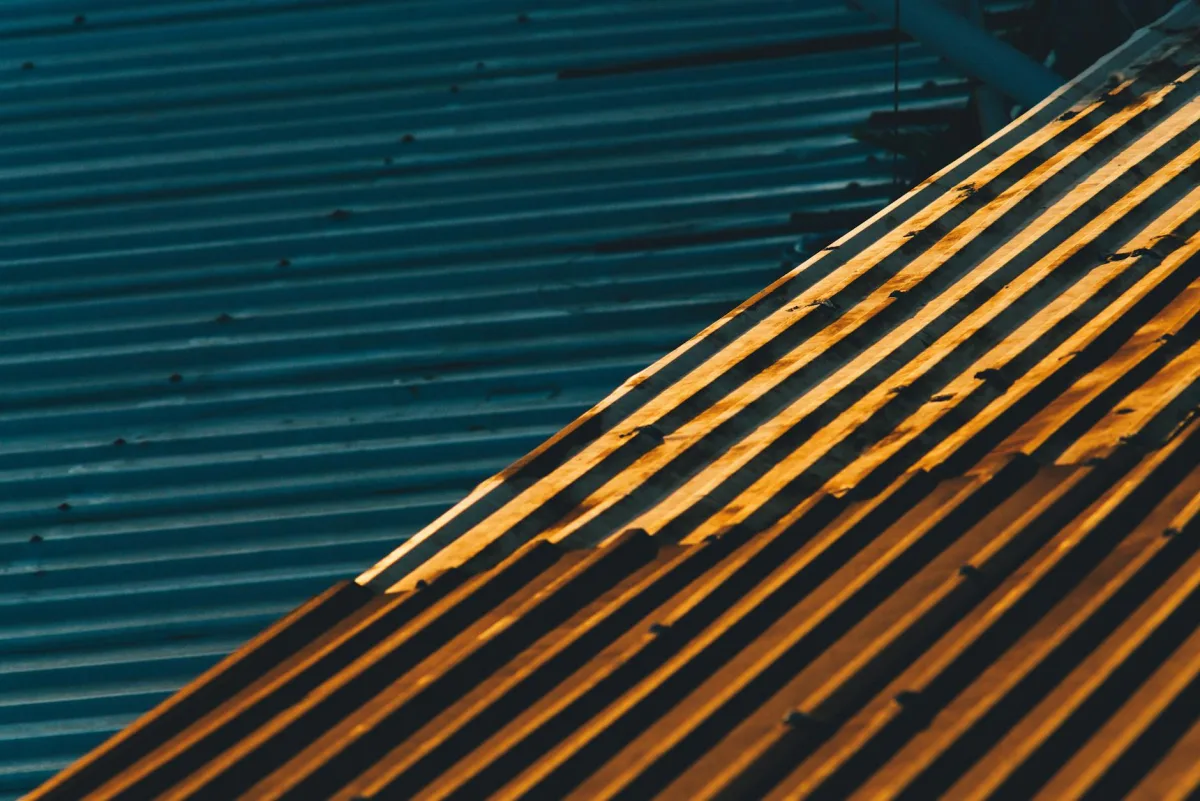
Polyester coating (PE) under Almaty UV fades and loses its protective properties within 5–8 years. The roof starts to rust. Replacing roof profiled sheet without dismantling part of the building is complex and expensive.
Sealant at flashings — ridge, parapet, wall junction: poor-quality material cracks under thermal cycling (Almaty: −25°C in winter, +40°C in summer on the roof = ΔT up to 65°C) within 3–5 years.
Rule: Roof profiled sheet — 0.6–0.7 mm, PVDF or PUR coating. Flashings — only roofing polyurethane sealant rated −40°C … +90°C.
6. Flooring
What gets cut: No hardener (topping), thin slab without calculation, mesh instead of reinforcement cage.
Why you can't: The floor in a warehouse is the most heavily loaded element. A forklift accelerating and braking creates impact loads on the surface. Without topping, concrete starts to dust within 1–2 years and chip at turning zones within 3–5 years.
Almaty specifics: Expansion joints in the floor in a seismic zone are not just for thermal expansion. During tremors the slab "moves", and improperly designed joints fail. The correct joint design (including sealant that allows movement) is part of the project in a seismic zone.
Quartz topping: adds 2,000–3,000 ₸/m² to the slab cost. For a 1,000 m² floor that is 2–3 million ₸. Cost of replacing the floor in 3–5 years without topping: 5–10 million ₸ (demolition, removal, new slab).
Floor without topping — wasted money in an active warehouse
7. Drainage System
What gets cut: No linear drainage at the gates, poor-quality roof drainage, minimal slope of the apron.
Why you can't in Almaty: Almaty cloudbursts are a real phenomenon. The June 2021 downpour flooded part of the industrial zones. In the Alatau district, spring snowmelt from the mountains is an annual event.
In addition, intensive roof snowmelt over 1–2 warm spring days combined with poor drainage can create a critical load on the roof (water weight up to 100 kg/m²).
Rule: External apron with 2–3% slope away from the building, a storm drain system sized for Almaty cloudbursts (intensity up to 60–80 l/min·ha), drainage at the gates. Cost: 1–2 million ₸ for a 1,000 m² warehouse. Cost of dealing with one flooding incident: from 500,000 ₸.
8. Bolted Connections in the Seismic Zone
What gets cut: Ordinary bolts instead of galvanised, no torque control, no sealing of connections.
Why you can't in Almaty: Bolted connections in a seismic zone are critical nodes. Under cyclic seismic loading, bolts tightened with insufficient torque loosen. This is called "self-loosening" — a real risk with repeated tremors.
Requirements for Almaty:
- High-strength bolts (grade 8.8 or 10.9 per GOST) — for load-bearing connections
- Thermal diffusion zinc coating — protection against mountain humidity
- Torque-controlled tightening with a protocol (documented proof)
- Lock washers or locknuts — to prevent self-loosening under seismics
- Gap sealing — moisture protection under cyclic deformation
We build in Almaty in full compliance with seismic and climate requirements
StroyHub uses hot-dip galvanised bolts with torque control, an epoxy primer + polyurethane topcoat system, and quartz topping on floors — by default. No hidden shortcuts.
Where You Can Reasonably Optimise in Almaty
So it doesn't seem like you can't save anywhere:
- Architectural decoration — facade elements, non-standard panel colours (standard RAL is cheaper)
- Office zone — minimal finishes for welfare facilities with a small team
- Car park area — gravel instead of asphalt in part of the territory
- Perimeter lighting — minimum set for safety
- Fencing — economical sections instead of wrought iron
- Facade cladding — standard profiled sheet instead of aluminium panels (where not required by purpose)
FAQ
How to distinguish sensible saving from dangerous cutting in the Almaty context?
Simple criterion: if the saving affects seismic resistance, load-bearing capacity, moisture protection, or coating durability — it's dangerous. If it only affects the appearance or comfort of secondary areas — it's sensible.
How to verify that the contractor did not cut corners on seismics?
Demand the "Structural Solutions" section indicating the design seismicity and calculation results, bolt tightening protocols, and as-built drawings with element cross-sections. Also — a positive state expert review conclusion.
What happens if you build without state expert review in Almaty?
Administrative fine + order to demolish or bring into compliance. In the event of a casualty resulting from structural failure — criminal liability for the owner and contractor.