The auto parts market in Kazakhstan is growing at 12-15% annually, with Almaty remaining the primary distribution hub for Central Asia. A modern warehouse with cross-dock capabilities reduces delivery time to service centers by 40-50% and lowers storage costs. In 2026, importers and distributors are actively transitioning to hybrid storage-transit models requiring specialized design and equipment.
45,000–65,000 ₸/m²
equipment costs
complete finishing, shelving, management systems, excluding land and structure
8–12 weeks
construction timeline
from design to turnkey delivery for 2,000–5,000 m² facilities
up to 40%
delivery time reduction
through cross-dock operations and route optimization
10–15 years
equipment amortization period
and management systems at average turnover rates
Critical Requirements for Importers
SKU Structure and Product Profiles in Almaty Cross-Dock
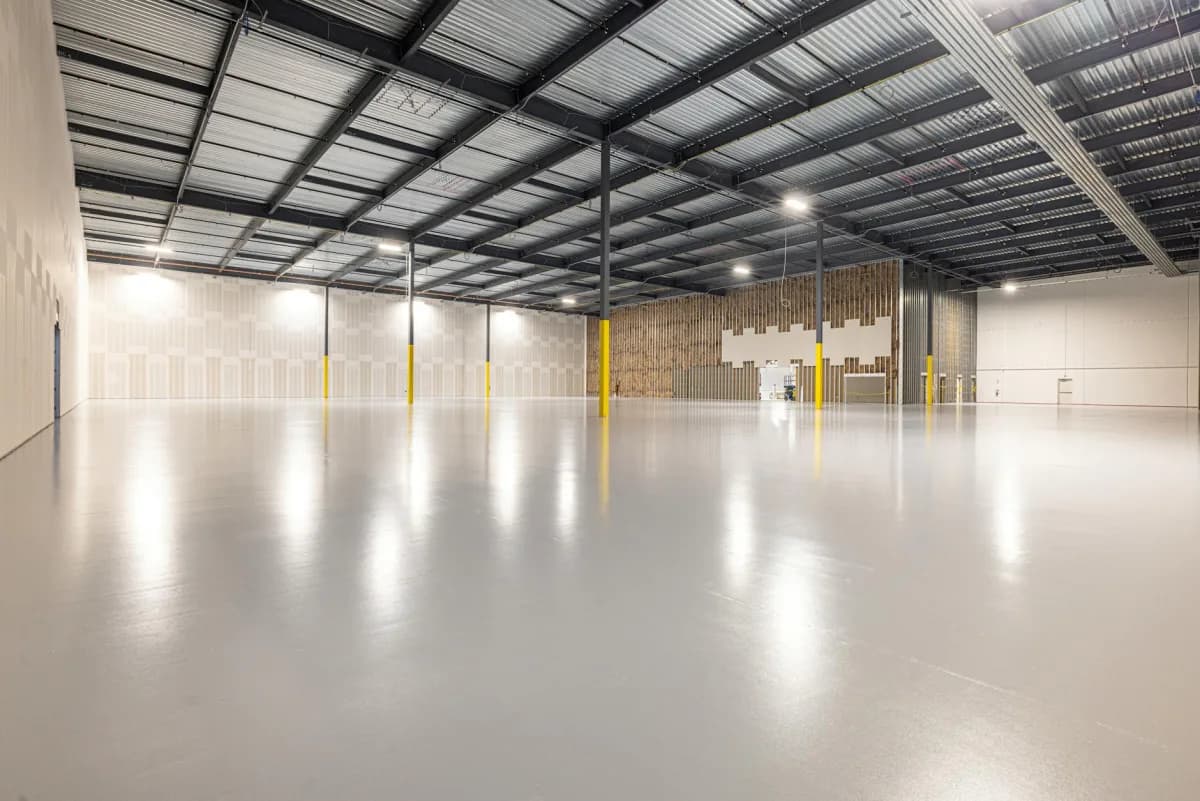
A typical auto parts warehouse in Almaty$2 operates with 8,000–15,000 SKUs divided into four main categories: engines and assemblies (15–20% of volume, high value, low turnover), consumables (filters, oils, belts—35–40%, fast-moving), electrical and electronics (20–25%, sensitive to humidity and temperature), and body parts (10–15%, requiring large storage areas). Cross-dock operations mean 30–50% of incoming flow bypasses shelving and goes directly to sorting and shipment to regional service centers and dealers. This requires dividing the warehouse into three zones: receiving (500–800 m²), cross-dock sorting (600–1,000 m²), and buffer storage (1,500–3,000 m²). Almaty as a logistics center enables serving service centers within a 200 km radius in 24–48 hours. For example, StroyHub (stroihub.com) designs such facilities in compliance with Kazakhstan standards SNiP 2.11.02-2003 (warehouses) and Customs Code requirements for import operations. Average SKU in consumables occupies 0.15–0.25 m³, while assemblies occupy 0.5–1.5 m³. This determines shelf height (typically 5–6 meters) and storage density.
Picking Routes and Warehouse Management System
Effective cross-dock requires WMS (Warehouse Management System) integrated with 1C, SAP, or cloud solutions like Logistika.kz or Almaty Logistics Hub. Picking routes follow ABC analysis principles: Category A items (20% of SKUs, 80% of turnover) are placed in quick-access zones at 1.2–1.8 m height, Category B at mid-levels (2–3.5 m), and Category C at upper levels or warehouse depth. For cross-dock operations, minimizing picking time is critical: an average order of 15–25 items should be picked in 20–30 minutes. This is achieved through zoning: each picker works in their zone, then orders are consolidated at the packing line. Distance between receiving and shipping should be minimal—optimally 50–100 meters. The system must track inventory in real-time, forecast demand (especially seasonal peaks in March-April and September-October), and automatically generate supplier orders. In Almaty, typical order cycles from importers are 25–35 days, making buffer stock critical. WMS must also integrate with delivery systems (Yandex.Logistics, Kolesa.kz, local couriers) for automatic route generation to service centers and dealers.
Mezzanines for Picking and Storage: Design and Equipment
Mezzanines are intermediate floors that increase usable warehouse space by 30–50% without expanding the perimeter. For auto parts warehouses, mezzanines are particularly effective: heavy assemblies (engines, transmissions, radiators) are stored on the lower level, while consumables and electronics occupy the mezzanine. Height between floor and mezzanine should be 2.5–3 meters, between mezzanine and ceiling 2.2–2.5 meters. Mezzanines are constructed from metal frames (channel 16–20, angle 75×75) with metal sheet or wooden panel decking covered with anti-slip coating. Load capacity is calculated at 500–800 kg/m² depending on product type. Mezzanine costs range from 8,000–12,000 ₸/m² (materials and installation), cheaper than building expansion. For cross-dock operations, mezzanines serve as intermediate sorting zones: goods arrive at the lower level, are sorted on the mezzanine by delivery direction, then descend to the packing line. This reduces picking time by 15–20%. Mezzanines must include stairs (minimum two for evacuation), railings 1.1 meters high, and fire-rated hatches. The building's load-bearing structure must accommodate additional weight: for a 1,000 m² mezzanine with 600 kg/m² load, this equals 600 tons. A typical 3,000 m² warehouse with one 1,500 m² mezzanine increases usable space to 4,500 m², equivalent to 50% expansion.
Security, Climate Control, and Fire Safety Systems
Auto parts warehouses must comply with Kazakhstan's Labor Safety and Protection Code (KzPP) and fire safety standards (SP RK 5.01-01-2018). Video surveillance includes minimum 12–16 cameras (2–4 MP resolution, night vision) with 30-day recording. Access control: turnstiles or RFID systems for employees, video intercom for visitors. Motion-sensor alarms in storage and cross-dock zones. For electronics and high-value assemblies, separate secure storage is recommended. Climate control is critical: temperature 15–25°C, humidity 40–60% (for electronics and paint materials). Ventilation must provide 4–6 air changes per hour. Air conditioning costs 3,000–5,000 ₸/m² (installation and equipment). Fire protection includes sprinklers (for Category B fire hazard), fire extinguishers (one per 50 m²), and fire exits (minimum two, at least 25 meters apart). Fire system costs: 2,000–3,500 ₸/m². Power supply must be redundant: primary 380V line with 50–100 kVA backup generator (for critical systems: WMS, surveillance, refrigeration). Grounding and lightning protection are mandatory.
Equipment and Finishing Costs: 2026 Almaty Calculation
Complete warehouse equipment costs in Almaty (excluding land and structure) range from 45,000–65,000 ₸/m² depending on automation level. Cost breakdown: shelving and racking systems (12,000–18,000 ₸/m²), mezzanines if required (8,000–12,000 ₸/m²), flooring (concrete screed, anti-slip coating—3,000–5,000 ₸/m²), climate control (3,000–5,000 ₸/m²), fire systems (2,000–3,500 ₸/m²), surveillance and access control (1,500–2,500 ₸/m²), WMS and IT infrastructure (2,000–4,000 ₸/m²), power supply and backup (2,000–3,000 ₸/m²), finishing and miscellaneous (3,000–5,000 ₸/m²). For 3,000 m², total equipment costs reach 135–195 million ₸. Timeline: design (2–3 weeks), equipment procurement (3–4 weeks), installation (4–6 weeks), WMS testing and launch (1–2 weeks). Total: 10–15 weeks from contract signing to full readiness. StroyHub (stroihub.com) offers comprehensive solutions: from design compliant with Kazakhstan standards to equipment supply and installation. Financing: typical ROI for Almaty cross-dock is 18–24 months at average 800–1,200 orders daily with 8–12% logistics service margins.
Integration with Service Centers and Dealers: Logistics Channels
Almaty cross-dock must integrate with service center and dealer networks through multiple channels. First channel: direct supply to major service centers (Hyundai Service JSC, Toyota Service, local networks like Kolesa.kz and Avto.kz). Second channel: distribution through regional dealers in Zhambyl, Turkistan, and Mangystau regions (200–600 km distances, 24–72 hour delivery). Third channel: B2B supply to small service centers and repair shops through aggregators (Logistika.kz, Almaty Logistics Hub, local couriers). Fourth channel: retail through online stores (Kolesa.kz, Avto.kz, proprietary website). Each channel requires distinct logistics: major service centers receive orders in 4–8 hours, regional dealers in 24–48 hours, small service centers in 48–72 hours. Delivery costs: Almaty (0–30 km)—500–1,500 ₸, regional (30–200 km)—2,000–5,000 ₸, neighboring regions (200–600 km)—5,000–15,000 ₸. Cross-dock consolidates orders and reduces delivery costs by 20–30%. Integration with tracking systems (GPS, SMS notifications) is mandatory. Typical Almaty service center orders 5–15 items daily; dealers order 50–200 items weekly. Average transaction: 15,000–50,000 ₸ for service centers, 100,000–500,000 ₸ for dealers. The management system automatically generates delivery routes, optimizing fuel costs and transit time.
Frequently Asked Questions
What is the cost of cross-dock equipment in Almaty in 2026?
Complete equipment costs (excluding structure and land) range from 45,000–65,000 ₸/m². For 3,000 m², this totals 135–195 million ₸. Costs include shelving, mezzanines, climate control, fire systems, WMS, surveillance, and power supply.
How long does construction and launch take?
From contract signing to full readiness: design (2–3 weeks), equipment procurement (3–4 weeks), installation (4–6 weeks), WMS testing (1–2 weeks). Total: 10–15 weeks.
What standards and requirements apply to auto parts warehouses in Kazakhstan?
Key standards: SNiP 2.11.02-2003 (warehouses), SP RK 5.01-01-2018 (fire safety), Kazakhstan Labor Safety and Protection Code. Import operations require a customs warehouse license (SVKh) from Almaty Customs.
How do I choose cross-dock size and configuration?
Size depends on turnover volume: 1,000–2,000 daily orders require 2,000–3,000 m² (including receiving, sorting, buffer storage, and packing). Configuration: receiving (500–800 m²), cross-dock sorting (600–1,000 m²), buffer storage (1,500–3,000 m²), office and facilities (200–300 m²).
Turnkey Cross-Dock Design
StroyHub designs and builds auto parts warehouses with cross-dock in Almaty, complying with Kazakhstan standards, customs requirements, and logistics specifics. From design to WMS launch—complete cycle in 10–15 weeks.