Sandwich panels are the most widely used material for insulated hangars in Kazakhstan. If you need year-round operations or need to store temperature-sensitive goods, they are practically the only viable choice. In this article we examine the structure, costs, installation timelines and all the nuances you need to know before starting construction.
from 70,000 ₸/m²
insulated hangar
turnkey with 100 mm panels
100–200 mm
panel thickness
for the Kazakhstani climate
30–60 days
installation time
frame + panels + roof
25 years
service life
with proper maintenance
What a Sandwich Panel Is and How It Works
A sandwich panel is a three-layer building element: two steel sheets with an insulation core between them. This construction provides both structural strength and thermal insulation simultaneously.
Insulation Types in Panels
Mineral wool (basalt) — the most common option for warehouse and industrial facilities. Non-combustible, good sound absorption, vapour-permeable. Density 80–120 kg/m³. Used in the majority of industrial hangars.
Polyisocyanurate (PIR) — a modern option. Thermal conductivity is 20–30% lower than mineral wool, so at the same thickness it provides better insulation. Used in refrigerated warehouses and facilities with elevated energy-efficiency requirements.
Expanded polystyrene (EPS) — the cheapest option. Not recommended for industrial facilities due to combustibility (class G3-G4). Used only where fire safety codes permit.
Panel Construction Parameters
Standard panel width — 1,000 mm and 1,200 mm. Length — from 3 to 13.5 m (custom order). Thickness is chosen based on the climate zone and the purpose of the facility.
Why Sandwich Panels Are Right for Kazakhstan's Climate
Kazakhstan has an extreme continental climate. The temperature difference between summer and winter in Almaty reaches 65°C, in Astana — 75°C. A profiled-sheet hangar does not solve the problem: in summer it's +50°C inside, in winter the interior temperature equals the exterior.
A sandwich panel with 100 mm mineral wool has a thermal resistance of R = 2.5 m²·°C/W. This allows:
- with 50 kW of heating, to maintain +15°C when it is −30°C outside in a 1,000 m² building;
- to reduce gas or electricity consumption for heating by 4–6 times compared to profiled sheeting.
In Kazakhstan's conditions, where temperatures range from −40°C in winter to +42°C in summer, sandwich panels are used for:
- storing grain, vegetables and food products;
- repair workshops and manufacturing facilities;
- logistics complexes operating around the clock;
- vehicle fleets and equipment requiring heating;
- pharmaceutical and electronics warehouses.
Which Panel Thickness Is Required — Detailed Calculation
Choosing panel thickness is a balance between capital costs and operating heating expenses.
| Thickness | Climate Zone | Typical Use | Approx. R |
|---|---|---|---|
| 50 mm | Not recommended | Temporary stores in the south | 1.25 m²·°C/W |
| 80 mm | Southern Kazakhstan | Low thermal demands | 2.0 m²·°C/W |
| 100 mm | Central Kazakhstan, Almaty | Standard for most facilities | 2.5 m²·°C/W |
| 150 mm | Astana, Kostanay, Petropavlovsk | Harsh climate, active thermal loads | 3.75 m²·°C/W |
| 200 mm | Northern regions, cold stores | Maximum insulation, low-temperature use | 5.0 m²·°C/W |
Under SNiP RK 2.04-21-2004 "Thermal Protection of Buildings", the minimum thermal resistance for building envelopes of industrial buildings is R ≥ 2.1 m²·°C/W in Almaty and R ≥ 2.8 m²·°C/W in Astana.
Practical tip: do not try to save by going 50 mm below the recommended thickness. The price difference between 100 mm and 150 mm panels is approximately 1,500–2,000 ₸/m². On a 1,000 m² project that is 1.5–2 million ₸. The difference in annual heating costs, however, is 2–4 million ₸.
Types of Sandwich Panel Hangars
Framed Hangar with Sandwich Panels
The classic scheme: a steel load-bearing frame (hot-rolled sections or LGSF) with sandwich panels cladding the walls and roof. This is the most versatile option.
Advantages: any span up to 60 m, any height, easy expansion by adding bays.
Best for: logistics complexes, manufacturing facilities, large agricultural operations.
Frameless Hangar with Insulation
Frameless arch structure with internal insulation. More complex to execute than a framed variant, but cheaper for small spans up to 18–20 m.
Disadvantage: the arched form reduces useful height at the edges; insulation attachment is non-standard.
Modular Hangar
A fast-build prefabricated structure with factory-ready components. Installed by a crew of 4–6 in 7–10 days without heavy machinery. Popular in the agricultural sector and for small businesses.
Structural Details: What to Pay Attention To
Panel Joints
Panel joints are the main zone of heat loss and potential freezing. A correct joint: tongue-and-groove connection with overlap, sealed with polyurethane or acrylic sealant. Poor joint sealing causes winter condensation and 15–25% heat loss.
Fasteners
Panels are fixed to the frame purlins with self-drilling screws and EPDM washers. Fastener spacing — 500–600 mm for wall panels, 250–300 mm for roof panels. Non-compliance with fastener spacing directly causes panel deflection under snow load.
Drainage
A pitched roof must have gutters. Without a rainwater system, water runs down the wall panels, destroying joints and causing corrosion at the base of the walls within 3–5 years.
Vapour Barrier
Warm warehouses require an internal vapour barrier layer. Without it, moisture from the air condenses inside the panel, destroying the mineral wool insulation within 5–7 years.
Construction Stages for a Sandwich Panel Hangar
Full construction cycle for a typical 1,000 m² hangar:
1. Ground investigation and design (10–15 days) Geotechnical survey, development of structural steel drawings and architectural plans. For facilities up to 500 m² in most regions of Kazakhstan, a notification procedure is sufficient.
2. Manufacturing of structures (14–21 days) Parallel to the foundation. Factory production of the frame reduces the overall timeline by 3–4 weeks.
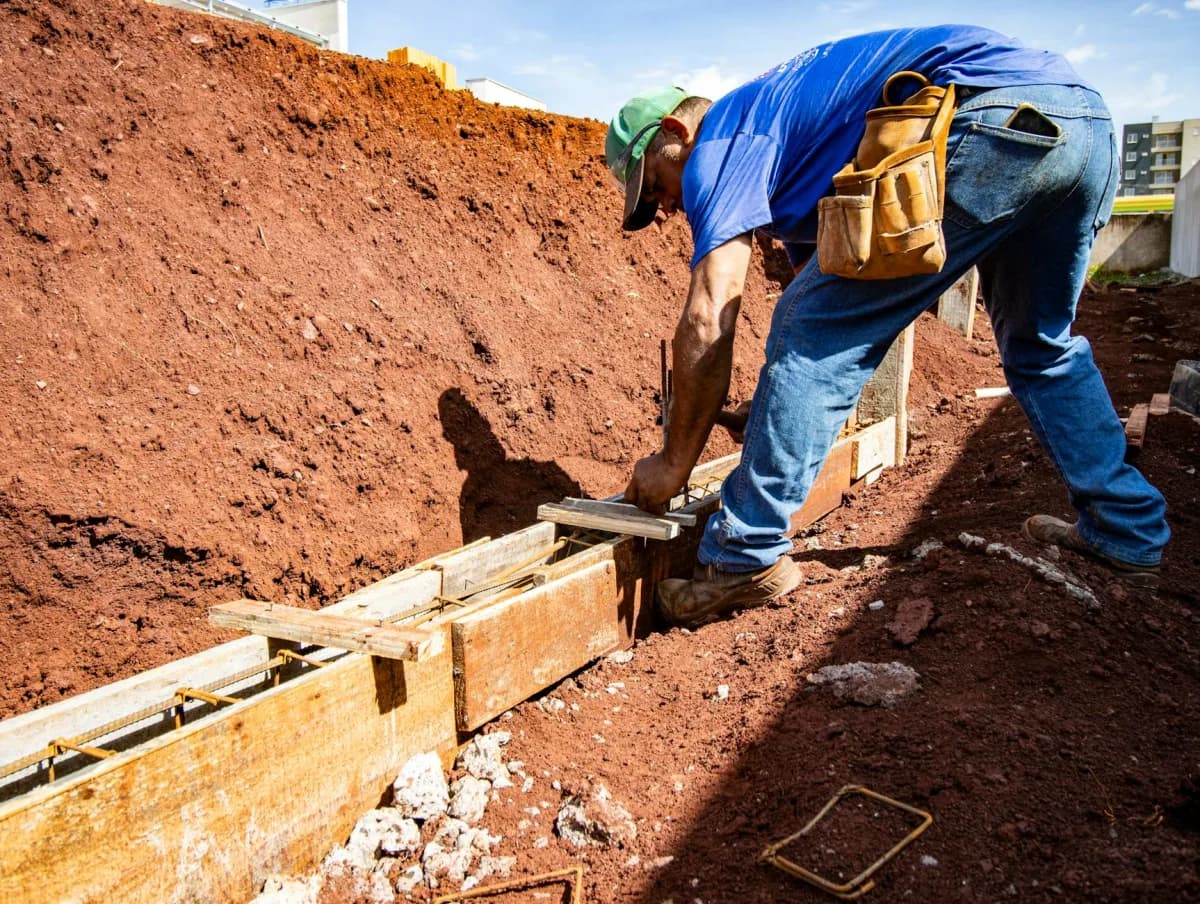
3. Foundation (14–21 days) Strip or pile foundation based on site geology. Plus 14–28 days for concrete to cure. This is the stage where you cannot save time.
4. Frame erection (7–14 days) Installation of columns, trusses and purlins. A straightforward stage with the right design.
5. Roof and wall installation (10–20 days) Laying roof panels (from ridge downward), fitting wall panels, installing gates and doors.
6. Engineering systems (7–14 days) Electrical, heating, ventilation. Run in parallel with stage 5.
Total time: 45–70 days from start for a 1,000 m² facility.
Cost of a Sandwich Panel Hangar in 2026
The cost is made up of four major items:
1. Steel Frame
35–45% of the total project cost.
2. Sandwich Panels
Roof panels: from 9,000–12,000 ₸/m² installed. Wall panels: from 8,000–11,000 ₸/m² (100 mm), from 10,000–14,000 ₸/m² (150 mm).
3. Foundation
4–8 million ₸ for a 500–1,000 m² facility on normal ground.
4. Engineering Systems
Basic heating + electrical: 3–8 million ₸ for a 500–1,000 m² facility.
2026 Price Benchmarks
| Area | Cold (profiled sheet) | Warm (sandwich 100 mm) | Warm (sandwich 150 mm) |
|---|---|---|---|
| 300 m² | from 7 million ₸ | from 21 million ₸ | from 26 million ₸ |
| 500 m² | from 11 million ₸ | from 35 million ₸ | from 43 million ₸ |
| 1,000 m² | from 20 million ₸ | from 65 million ₸ | from 80 million ₸ |
| 2,000 m² | from 38 million ₸ | from 120 million ₸ | from 148 million ₸ |
The price difference between a cold and an insulated hangar pays back through heating savings in 3–5 years of operation.
Maintenance and Operation
Panel care. Façade washing 1–2 times per year. Check joint sealants every 3 years, replace every 8–12 years. Touch up mechanical damage.
Anti-corrosion protection. Factory panel coating — polyester or PVDF. PVDF coating service life — 25–30 years without maintenance. Polyester requires inspection after 10 years.
Routine maintenance. Tighten frame bolted connections every 5 years. Clean the rainwater system twice per year.
We will calculate a sandwich panel hangar for your project
Tell us the area, purpose and region — we will prepare a preliminary estimate broken down by line item within 1 day.
Frequently Asked Questions
How long do sandwich panels last? The standard service life is 25 years. With proper maintenance (timely sealant replacement, touching up damaged areas), the actual service life is 30–40 years. The building frame lasts 50+ years.
Can panels be added to an existing cold hangar? Yes, this is a standard operation. A cold profiled-sheet hangar can be "insulated" by installing wall and roof sandwich panels over the existing structure or from the inside. The cost of work is 60–80% of a new insulated hangar.
What thickness is needed for grain storage? For a grain store, moisture control is just as important as insulation. 100 mm mineral wool + active ventilation is recommended. For long-term storage (more than 12 months) — 150 mm.
Is a construction permit required for a sandwich panel hangar? In Kazakhstan, facilities up to 500 m² follow a simplified (notification) procedure. Documents are processed in 5–15 working days. Facilities from 500 m² require a full construction permit.
Will sandwich panels withstand Kazakhstan's wind loads? Yes, with proper design. Wind loads for each region of Kazakhstan are standardised in SNiP RK 2.01-37-2019. Panel fastener calculations are performed for each specific region.
Can a sandwich panel hangar be dismantled and relocated? In theory, yes. In practice, dismantling without damaging panels is difficult. Approximately 60–70% of panels remain usable. If mobility is critical — consider a frameless hangar.
What does 1 m² of a sandwich panel hangar cost? Turnkey price with 100 mm panels: 65,000–85,000 ₸/m² for facilities of 500–1,000 m². The larger the area, the lower the per-square-metre cost due to scale.