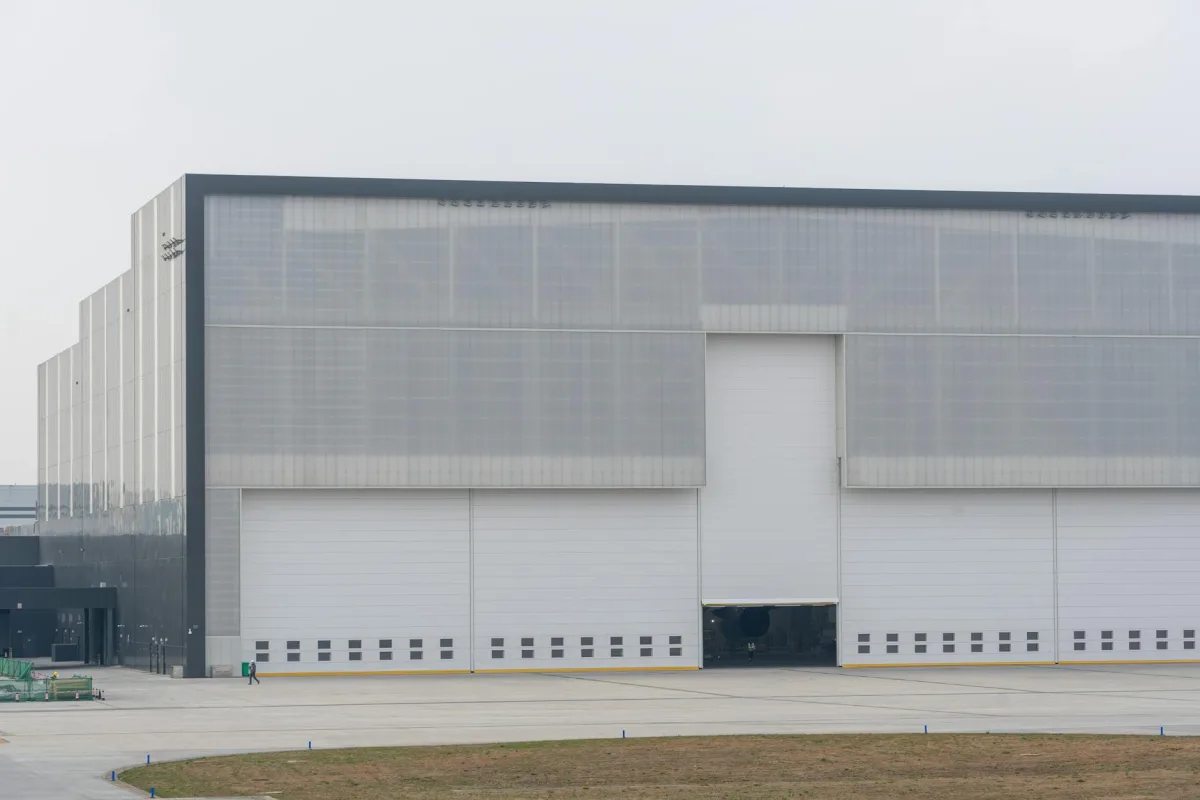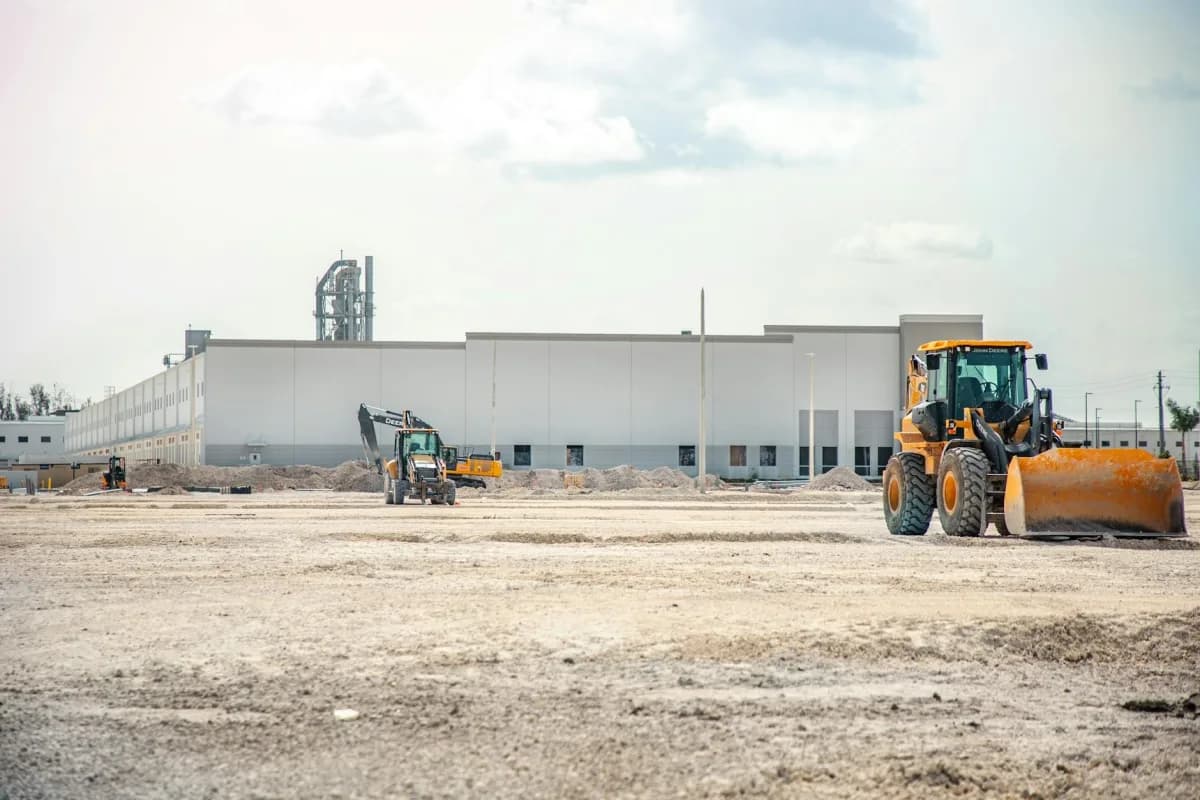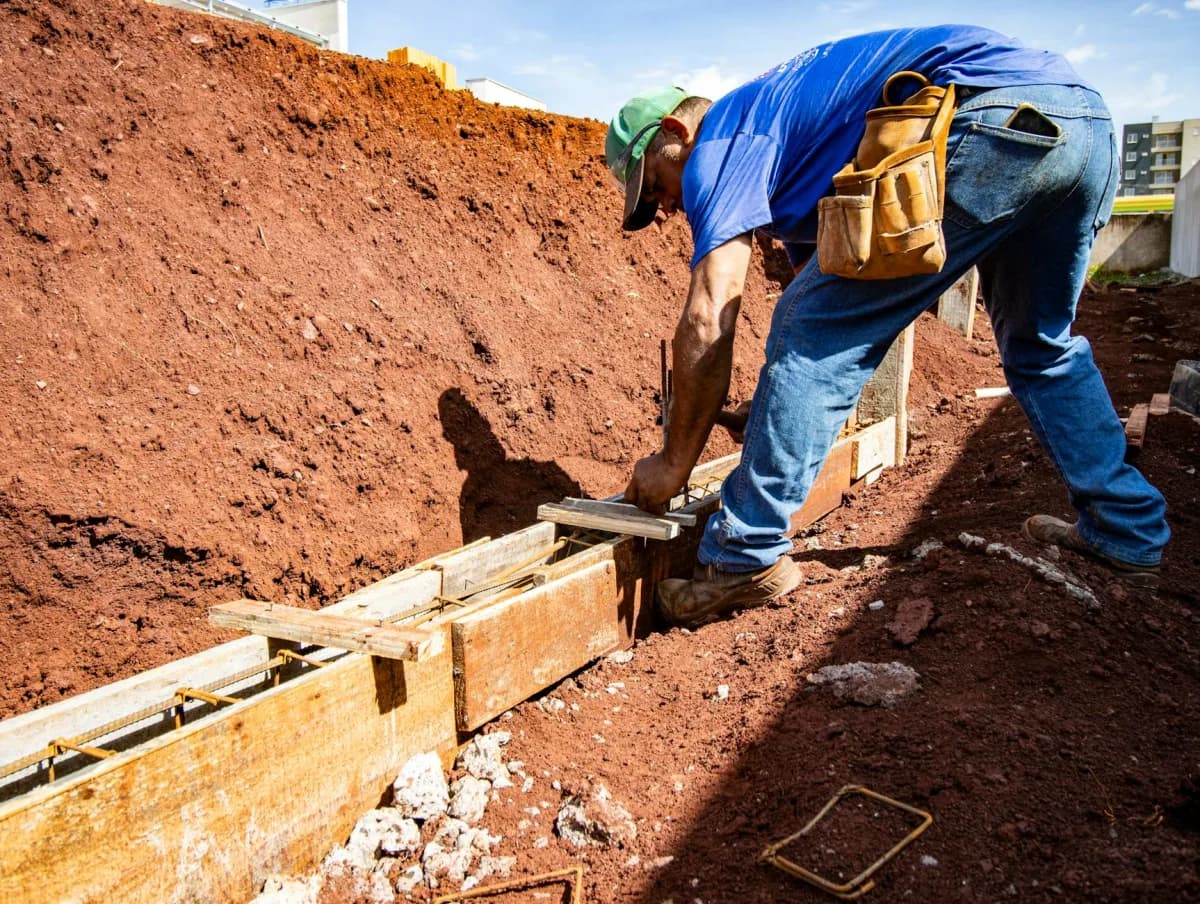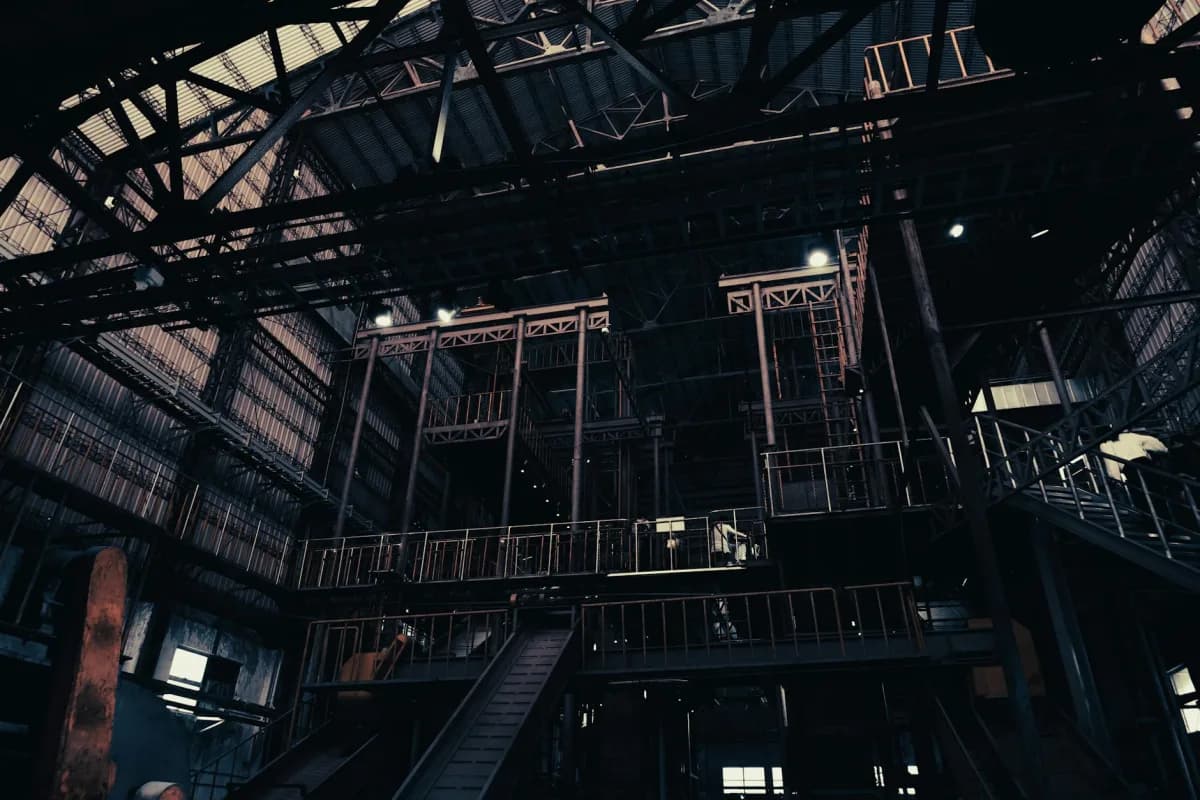
"Pre-engineered" is not a marketing buzzword — it is a specific technology. A steel frame with cladding panels is erected 3–5 times faster than traditional reinforced concrete. For businesses, this means: less capital tied up, faster launch, earlier payback. In this article — real stage-by-stage timelines, what accelerates the build, and what cannot be rushed no matter how large the budget.
7–14 days
small hangar up to 500 m²
frame and roof erection
30–45 days
medium 500–2,000 m²
turnkey including MEP
60–90 days
large from 2,000 m²
complex structures
2–3 weeks
foundation
including concrete curing time
Why steel-frame buildings are built quickly
The key to speed is factory-readiness of the elements. When a column, truss, or wall panel arrives on site, it only needs to be installed — not poured, dried, or left to gain strength. Compare:
| Stage | Monolithic reinforced concrete building | Steel-frame hangar |
|---|---|---|
| Design | 2–3 months | 1–2 weeks (standard) |
| Fabrication of structure | — (cast in place) | 2–4 weeks in factory |
| Foundation | 30–45 days (heavier loads) | 14–21 days |
| Concrete curing | 28 days mandatory | 14–28 days (foundation only) |
| Frame erection | 60–120 days | 7–21 days |
| Cladding | 30–60 days | 10–20 days |
| Total | 8–18 months | 45–90 days |
The decisive advantage of steel frame is parallel work: while the foundation is being poured on site, the structural elements are simultaneously being fabricated at the factory. This cuts the total schedule by 3–6 weeks.
Detailed stage-by-stage breakdown
Stage 1. Design
Standard project (adaptation): 5–10 working days. If the footprint is a standard size (18×36 m, 24×48 m, etc.), the engineering solutions are already developed and only need to be adapted to the site.
Custom project: 15–25 working days. Non-standard dimensions, special loads, crane beams, bespoke connections.
Can it be reduced to 3–5 days? Yes, with a design-and-build approach — some factories provide standard projects on the day of inquiry on the condition their own structural systems are used.
Stage 2. Permits and approvals
For buildings up to 500 m² in Kazakhstan — notification procedure: 5–15 working days.
For buildings 500–5,000 m² — construction permit: 30–60 working days.
This cannot be self-accelerated. Documents are submitted in parallel with design and factory fabrication — no time is lost if the process is properly organized.
Stage 3. Factory fabrication of structural elements
Depends on the factory's workload and order volume:
| Order volume | Fabrication time |
|---|---|
| Up to 20 t (small hangar up to 500 m²) | 7–14 days |
| 20–50 t (500–1,500 m²) | 14–21 days |
| 50–100 t (1,500–3,000 m²) | 21–30 days |
| Over 100 t | 28–45 days |
Rush orders (priority production) are possible with a 15–20% premium but reduce the timeline by roughly half.
Stage 4. Foundation
The most "non-accelerable" stage due to the physics of concrete curing.
Earthworks: 2–5 days. Reinforcement and formwork: 3–7 days. Concrete pour: 1–2 days. Curing: 14–28 days (minimum 14 days at +15°C and above).
Foundation total: 20–42 days.
In winter, curing slows: at −5°C, heating is required and the time roughly doubles. Modified concrete with accelerants can reduce this to 10–12 days, but at extra cost.
Stage 5. Steel frame erection
With fabricated elements ready and foundation prepared:
| Hangar area | Number of erectors | Erection time |
|---|---|---|
| Up to 300 m² | 4–6 workers | 3–7 days |
| 300–1,000 m² | 6–10 workers | 7–14 days |
| 1,000–3,000 m² | 10–16 workers | 14–21 days |
| Over 3,000 m² | 16–25 workers | 21–35 days |
A crane with 16–25 t capacity is required. Without a crane, erection is either impossible or takes twice as long.
Stage 6. Cladding (walls and roof)
Installation of corrugated sheet or sandwich panels:
- Roof sheeting: 200–400 m²/day with a crew of 6.
- Roof sandwich panels: 100–150 m²/day (more labour-intensive due to weight and joints).
- Wall panels: 80–120 m²/day.
For a 1,000 m² hangar: approximately 10–15 days for roof and walls.
Stage 7. MEP services
Run in parallel with cladding installation:
- Electrical wiring: 5–10 days for a 1,000 m² hangar.
- Heating installation: 7–14 days.
- Ventilation: 5–10 days.
When work is conducted in parallel, MEP services add no days to the overall schedule.
What genuinely accelerates construction
1. Ready standard project. Do not commission custom design if a standard 18 m or 24 m span suits your requirements. Saving: 2–3 weeks.
2. Parallel working: foundation + factory. Sign the fabrication contract simultaneously with the start of foundation work. The elements arrive when the foundation is ready.
3. Good ground conditions. On collapsible or waterlogged soils, the foundation takes 4–8 weeks instead of the standard 3 weeks. Ground conditions are the key schedule variable.
4. Winter construction. With a heated enclosure (tent shelter with heaters), erection proceeds at −30°C. Cost of the enclosure: 500,000–2,000,000 ₸ per season, but justified for large projects.
5. Experienced erection crew. A coordinated, experienced crew installs the frame 30–50% faster than an inexperienced one.
6. Complete kit before erection starts. All elements (structure, fasteners, doors, roof) must be on site before erection begins. Waiting for a "missing bolt" is a real reason construction stops.
What cannot be accelerated
Concrete curing. The physical process of cement hydration. Minimum time under normal conditions: 14 days. Fast-setting cement reduces this to 7–10 days but increases the risk of cracking.
Permit approvals. Regulatory authorities work at their own pace. 30–60 days for buildings over 500 m² is a realistic timeframe. Expediting through official channels is not provided for in legislation.
Dealing with ground problems. If the geotechnical investigation reveals running sand, peat, or a high water table — this adds 2–6 weeks regardless of budget.
Cost of pre-engineered hangars in 2026
The price depends on three key factors: area, cladding type (cold vs heated), and whether MEP services are included.
| Area | Cold (corrugated sheet) | Heated (100 mm sandwich) | Heated with MEP |
|---|---|---|---|
| 200 m² | from 5 million ₸ | from 14 million ₸ | from 18 million ₸ |
| 500 m² | from 11 million ₸ | from 33 million ₸ | from 42 million ₸ |
| 1,000 m² | from 20 million ₸ | from 65 million ₸ | from 80 million ₸ |
| 2,000 m² | from 38 million ₸ | from 120 million ₸ | from 148 million ₸ |
| 5,000 m² | from 90 million ₸ | from 285 million ₸ | from 350 million ₸ |
Additional costs often not included in the initial quotation:
- Geotechnical survey: 300,000–700,000 ₸
- Permits and documentation: 100,000–500,000 ₸
- Floors (concrete screed): 1,500–3,000 ₸/m²
- Sectional doors (per unit, 4×4 m): 350,000–600,000 ₸
For a structural cost comparison by type, see steel structure prices 2026.
Turnkey vs self-managed construction
Turnkey with a single contractor:
- Single point of accountability
- Schedule optimization (the contractor manages the parallel workflow)
- 10–20% savings on coordination and procurement
- Convenient: one contract, one point of contact
Self-managed:
- Theoretically 10–15% cheaper
- Requires time and project management experience
- Delay risk if any subcontractor fails to deliver
- Difficult to pursue claims when quality issues arise
For most businesses whose core activity is not construction, the turnkey option is economically superior once management time is factored in.
For more on the turnkey format, see turnkey warehouse construction.
Need a hangar on a tight timeline?
Tell us your deadline — we will find a solution with a realistic schedule.
Frequently asked questions
How long does it take to build a 500 m² hangar in Kazakhstan? With a ready design and normal ground conditions: foundation — 20–25 days (in parallel with fabrication), frame and cladding erection — 12–18 days. Total from start of work to completed building — 35–45 days.
Can a hangar be built in under 30 days? For a small frameless hangar of 200–300 m² — yes. With a precast block foundation (no poured concrete) and a ready profile — 15–25 days is realistic. For a framed hangar from 500 m², less than 35 days is practically impossible due to concrete curing.
Can construction proceed in winter in Kazakhstan? Yes, steel-frame hangars are built at −30°C. Frame and panel erection requires no thermal protection. For the foundation in frost — a heated enclosure and anti-freeze admixtures are used. Winter construction costs 10–20% more but avoids losing an entire season.
What takes longer: permits or construction? For buildings over 500 m², the construction permit takes 30–60 working days — comparable to the construction time itself. That is why permits must be processed in parallel with design.
Why does the actual timeline exceed what the contractor promises? Typical causes of delays: unexpected ground conditions (piles instead of strip footing), waiting for permits, late delivery of elements from the factory, force majeure (rain, frost without a heated enclosure). Build in ±20% from the promised schedule as a buffer.
Which hangar type is the fastest to erect? The absolute record is a frameless hangar of 12×24 m on a ready foundation: 5–7 days erection time. Among framed systems, light gauge steel framing (LGSF) is the fastest: a small hangar of 200–400 m² — 7–10 days.